

Blog

Is the Hyundai Elantra a Good First Car? A Guide for New Drivers and Parents

Elantra

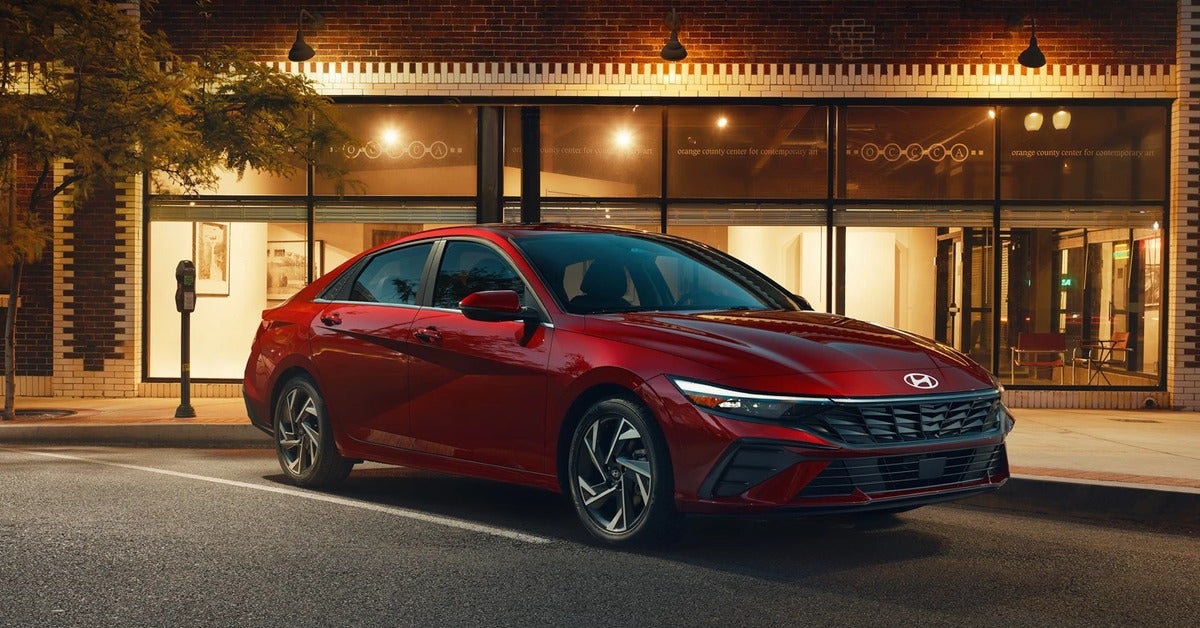
Handing over the keys for the first time is a big moment for any family. You want a car that helps a new driver avoid trouble, won't drain a starter budget, and won't surprise you with big repair bills. So, is the Hyundai Elantra a good first car? For most new drivers, the answer is yes. At Korum Hyundai, we help a lot of families shop for that first set of wheels, and the Elantra comes up again and again. Here's why, plus a checklist to help you choose the right one.

What Makes a Good First Car?

Before you compare models, it helps to know what you're looking for. Most driving instructors, insurers, and parents agree on a few basics:

  • Strong crash-test results and modern driver-assist features
  • Low fuel and upkeep costs that fit a first paycheck
  • Solid warranty coverage for peace of mind
  • A manageable size that's easy to park and see out of
  • Moderate power that's enough to merge, but not too much

The Elantra checks each of these boxes. It's a compact sedan, so it's easy to maneuver in tight lots and on busy streets. Its standard 2.0-liter four-cylinder makes 147 horsepower, plenty for highway on-ramps without tempting a new driver to push too hard. If you're open to a pre-owned option, browse our used Hyundai Elantra inventory to compare years and trims.

Safety Tech That Backs Up a New Driver

New drivers are still learning to scan the road, judge gaps, and stay focused. Hyundai SmartSense adds an extra set of eyes, and the core features come standard on the Elantra's base SE trim:

  • Forward Collision-Avoidance Assist with Pedestrian Detection, which can apply the brakes automatically
  • Lane Keeping Assist and Lane Following Assist to help keep the car centered
  • Blind-Spot Collision Warning for safer lane changes
  • Rear Cross-Traffic Collision-Avoidance Assist for backing out of parking spots
  • Driver Attention Warning, which alerts drivers who seem drowsy or distracted
  • Safe Exit Assist, which can warn passengers about traffic before they open a door

The crash-test results back this up. The Insurance Institute for Highway Safety (IIHS) rates the Elantra "Good," its top score, in the small overlap front and updated side tests. The latest Elantras also earn "Good" in the updated moderate overlap front test. Its headlights and pedestrian front crash prevention are rated "Good" across all trims, too.

These features help, but they don't replace good habits. Sit down with your new driver and walk through each alert so they know what the beeps and dash lights mean before they drive solo.

Lower Costs at the Pump and in the Shop

A first car has to fit a first-car budget. The Elantra helps here in two big ways.

Fuel Economy

The gas Elantra SE is EPA-rated at 31 mpg city, 40 mpg highway, and 35 mpg combined. If your new driver racks up miles commuting to school or a job, the Elantra Hybrid Blue stretches things further, with an EPA rating of 51 city, 58 highway, and 54 combined mpg.

Warranty Coverage

Hyundai backs every new Elantra with a 5-year/60,000-mile New Vehicle Limited Warranty and a 10-year/100,000-mile Powertrain Limited Warranty for the original owner. You also get 24-hour Roadside Assistance, a helpful safety net for a driver who's never dealt with a dead battery or flat tire alone.

Routine care keeps those costs low. Our Hyundai service center can set up a maintenance schedule so oil changes and tire rotations never get skipped.

New, Hybrid, or Used: Choosing the Right Elantra

The Elantra lineup gives you room to match the car to the driver and the budget:

  • SE: The core SmartSense features, an 8-inch touchscreen, LED projector headlights, and wireless Apple CarPlay and Android Auto
  • SEL Sport trims: Sportier styling, with available heated front seats, a sunroof, and Smart Cruise Control with Stop & Go on the SEL Sport Premium
  • Limited: Bose premium audio and Highway Driving Assist for longer trips
  • Elantra Hybrid: The best pick if fuel savings are the top priority

We'd steer most first-time drivers away from the turbocharged N Line. Its extra power is fun, but it's more than a new driver needs, and it can mean higher insurance quotes.

A recent pre-owned Elantra can also be a smart first step, since many still include modern safety tech. For recent graduates buying new, the Hyundai College Grad Program may help with a first purchase.

A First-Car Checklist for Parents and New Drivers

Ready to start shopping? Work through these steps together:

  • Set a total monthly budget that includes the payment, insurance, fuel, and maintenance
  • Get an insurance quote for the exact trim before you commit
  • Test drive on roads the new driver will actually use, including the highway, at night, and in the rain if you can
  • Practice parking and backing up using the rear camera and cross-traffic alerts
  • Set up the phone connection so music and maps run through the screen, not a hand

Wet roads and early sunsets are part of driving around Tacoma, Auburn, and Bonney Lake for much of the year, so a rainy-day test drive is worth it. When you're ready to talk numbers, our Hyundai financing options can help you find a payment that fits.

Frequently Asked Questions

Is the Hyundai Elantra a good first car for a teenager?

Yes. The Elantra combines standard driver-assist features, "Good" IIHS crash-test ratings, and a manageable 147-horsepower engine. Its compact size also makes it easier for a new driver to park and maneuver.

Is the Hyundai Elantra safe?

The IIHS rates the Elantra "Good" in the small overlap front and updated side crash tests, and the latest models also earn "Good" in the updated moderate overlap front test. Standard Hyundai SmartSense features include Forward Collision-Avoidance Assist with Pedestrian Detection, Lane Keeping Assist, and Blind-Spot Collision Warning.

What gas mileage does the Hyundai Elantra get?

The gas Elantra SE is EPA-rated at 31 city, 40 highway, and 35 combined mpg. The Elantra Hybrid Blue is EPA-rated at 51 city, 58 highway, and 54 combined mpg.

What warranty comes with a new Hyundai Elantra?

A new Elantra includes a 5-year/60,000-mile New Vehicle Limited Warranty and a 10-year/100,000-mile Powertrain Limited Warranty for the original owner. It also comes with 24-hour Roadside Assistance.

Can I test drive a Hyundai Elantra at Korum Hyundai?

Yes. Stop by Korum Hyundai at 111 River Road, Puyallup, WA 98371, or call 253-354-8334 to schedule a time. We're happy to ride along with a new driver and walk through the safety features.

Find Your First Hyundai Elantra in Puyallup

Between its standard safety tech, strong fuel economy, and long warranty coverage, the Hyundai Elantra is a good first car for drivers who want confidence without the big costs. Whether you're shopping for yourself or for a new driver in your family, our team will help you compare trims and find the right fit. Explore our new Hyundai inventory or call us at 253-354-8334 to set up a test drive.
Recommended Posts

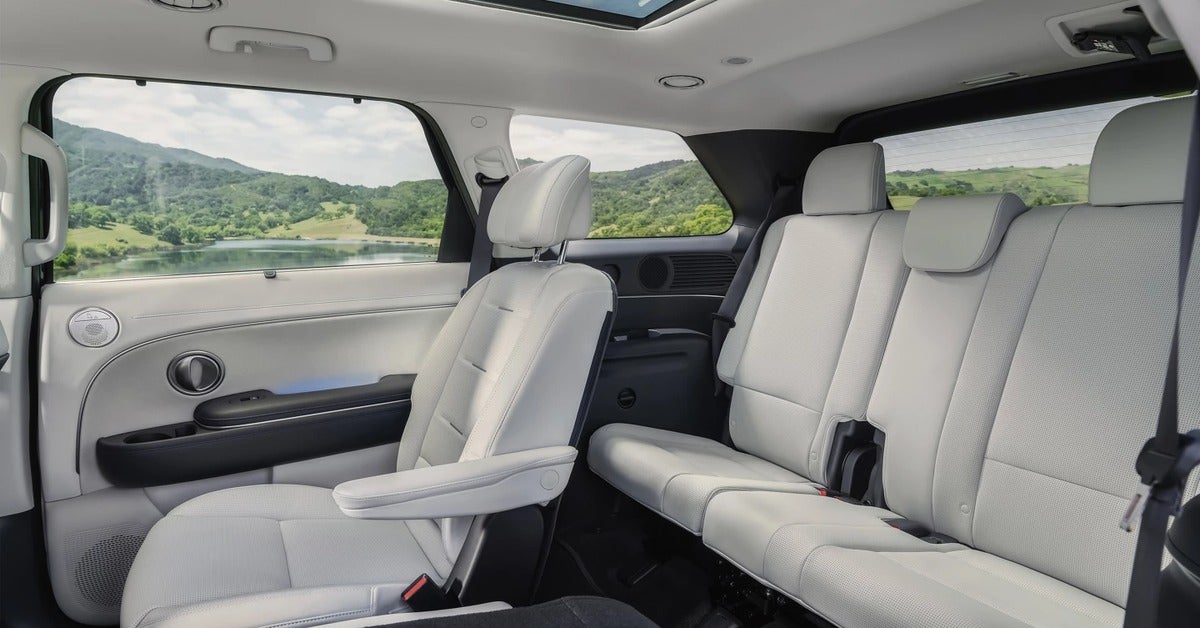
Light gray leather rear seats inside a Hyundai Palisade with green hills visible through the windows

Free Car Seat Check Near Puyallup: Hyundai's Child Passenger Safety Program With Seattle Children's

By Korum Hyundai Team · Published November 17, 2026 A free car seat check can catch installation mistakes that are easy to miss and hard to see. In August, Hyundai Motor America and Seattle Children's announced a collaboration to expand free child passenger safety education and car seat inspection events in Washington. The program offers free community car seat checks year round in Federal Way, Seattle and Bellevue. Puyallup is not named in the announcement, so this guide explains what a check involves, how to find one near you and how to get ready. Section Key point What Hyundai and Seattle Children's Announced The program is funded through Hyundai Hope, which Hyundai Motor America describes as its corporate social responsibility initiative. Why Car Seat Checks Matter Car seats work, but only when they are used correctly. What Happens at a Car Seat Check Every program is a little different, but the basics are similar. How to Get Ready for Your Appointment A little preparation makes the visit faster and more useful. Family Features in Hyundai SUVs A car seat check is about the seat, but the vehicle matters too. What Hyundai and Seattle Children's Announced The program is funded through Hyundai Hope, which Hyundai Motor America describes as its corporate social responsibility initiative. Seattle Children's brings the safety expertise. At the checks, certified Child Passenger Safety Technicians give hands on education, guidance and resources to help families install and use car seats correctly. Technicians also check for expired or recalled car seats and provide replacement seats if needed. Seattle Children's says it will expand community car seat check events into South King County in the years ahead. Hyundai says it partners with children's hospitals nationwide to deliver car seat inspections, safety education and essential resources. In other words, this is a hospital program with Hyundai support. Seattle Children's runs the events, so check with the hospital for current locations, days and times before you plan a trip. Is There a Free Car Seat Check Near Puyallup? Here is the honest answer. The announcement names three cities for the free community checks, and Puyallup is not one of them. Puyallup is in Pierce County, and the announcement does not mention Pierce County either. Those three cities are all north of Puyallup, so confirm details with Seattle Children's before you drive there. Other places to look. You still have options. NHTSA says certified technicians will inspect your car seat free of charge, in most cases, and show you how to install and use it correctly. NHTSA also says many police and sheriff departments, fire departments and children's hospitals have regularly scheduled car seat check days, or offer hands on help by appointment. Some locations now offer virtual inspections. If you cannot find a station near you, NHTSA says you may be able to find a technician through Safe Kids Worldwide. Questions to ask when you call Do I need an appointment, or can I drop in? Will a certified Child Passenger Safety Technician do the check? Can you help with my type of seat, such as an infant seat, a convertible seat or a booster? Will you check the expiration date and the recall status of my seat? Do you offer a virtual inspection if I cannot travel? Why Car Seat Checks Matter Car seats work, but only when they are used correctly. NHTSA says correctly installed car seats can reduce the risk of fatal injury in a passenger car crash by 71 percent for infants and 54 percent for toddlers. The same NHTSA release says almost half of all car seats are installed incorrectly, even though most parents and caregivers believe they know how to install them. Hyundai's announcement repeats a similar point from NHTSA: nearly half of car seats and booster seats are installed incorrectly or used improperly. That gap between confidence and correct use is why a second set of trained eyes helps. A technician can show you what a loose or twisted installation looks like and how to fix it. You leave knowing how to do it yourself the next time. What Happens at a Car Seat Check. Every program is a little different, but the basics are similar. A technician looks at your child, your seat and your vehicle, then helps you install the seat and use it correctly. Here is what to expect. The right seat for your child NHTSA says to select a car seat based on your child's age and size, then choose a seat that fits in your vehicle and use it every time. A technician can tell you whether your child is in the right type of seat or ready for the next stage. NHTSA describes the stages this way. Rear facing seat. NHTSA says your child should stay in a rear facing seat until reaching the top height or weight limit the seat's manufacturer allows. Forward facing seat. Once a child outgrows the rear facing seat, NHTSA says the child is ready for a forward facing seat with a harness and tether. Booster seat. When a child outgrows the harness seat, NHTSA says it is time for a booster seat, and the child should still ride in the back seat. Seat belt. NHTSA says a child should stay in a booster until big enough for the seat belt to fit properly, with the lap belt snug across the upper thighs and not the stomach. NHTSA also says to keep your child in the car seat for as long as the child fits within the manufacturer's height and weight requirements. Moving up early is not a milestone. It is a step down in protection, so let the seat's limits and a technician guide the timing. Anchors, belts and tethers. NHTSA says every car seat needs to be installed using either the lower anchors or a seat belt, never both. For a forward facing seat, NHTSA recommends always using a tether when both the car seat and vehicle manufacturers permit it. Your vehicle's owner's manual shows where the anchors are, and a technician can point them out. NHTSA also says lower anchors have weight limits set by the vehicle and car seat manufacturers. Once your child outgrows those limits, you stop using the lower anchor attachments and reinstall the seat using the vehicle's seat belt. These details are where many installations go wrong. Expired and recalled seats In the Seattle Children's program, technicians check for expired or recalled car seats and provide replacement seats if needed. It is a good idea to check your own seat before you go. Look for the model number and date on the label. NHTSA also says to register your car seat and booster seat so you are notified of any safety recalls. How to Get Ready for Your Appointment A little preparation makes the visit faster and more useful. Use this list. Bring the seat and its manual. The manual tells the technician your seat's limits and how it is meant to be installed. Bring your vehicle's owner's manual. NHTSA says to read both the car seat manual and the vehicle owner's guide before installation. Know your child's age, height and weight. These decide which seat type fits. Write down the seat's model number and date. You will need them to register the seat and to check for recalls. Clear the back seat. Remove toys, bags and clutter so the technician can reach the anchors. Ask whether your child should come. Some checks go more smoothly with the child there. Others do not need it. Make it a habit on every trip. A good install only helps if the seat is used every time. NHTSA says to plan to use the right car seat or booster seat when traveling and when riding in taxis or ride share vehicles. It also says to make sure children are buckled up correctly every trip, and to set an example by buckling up yourself. Never leave a child alone in a vehicle, even for a minute. NHTSA also says to take immediate action and call 911 if a child is seen alone in a vehicle. Family Features in Hyundai SUVs. A car seat check is about the seat, but the vehicle matters too. Hyundai lists several features that families may care about. Features vary by model year and trim, so confirm the details on the exact vehicle you are considering. Tucson Hybrid Hyundai says the Tucson Hybrid was named a Top Finisher in Cars.com's 2026 car seat report. Hyundai describes that test as a hands on car seat fit evaluation of different seat types, including infant and booster seats, with both rear and front facing fitments judged along with the accessibility of LATCH anchors. Cars.com's editor in chief, who is also a certified child passenger safety technician, called the Tucson Hybrid a great fit for smaller families. Hyundai's Tucson Hybrid page also lists LATCH lower anchors and upper tether anchors and rear child safety locks in its safety specifications. Hyundai's page also describes Rear Occupant Alert on certain trims. After the engine is turned off, the system shows a visual alert on the instrument cluster as a reminder to check the rear seats. Hyundai says it is not a substitute for driver attentiveness, and it adds that you should never leave a child or pet unattended in a vehicle. Palisade and Santa Fe Hyundai lists Safe Exit Assist on the Palisade and the Santa Fe. When the vehicle is parked, it can alert the driver when a vehicle is approaching from behind. When child locks are active, Hyundai says the system prevents initial disabling of the child safety locks if a vehicle approaching from behind is detected. That can matter on a busy street when kids climb out. Like any driver aid, it does not work in all situations and does not replace your attention. Test Your Car Seat in a Hyundai at Korum Hyundai NHTSA says not all car seats fit in all vehicles, and it recommends testing the seat you plan to buy to make sure it fits well in your vehicle. The same advice applies to a vehicle. If you are shopping for a family SUV, bring your car seats when you visit Korum Hyundai. Ask our team to show you where the lower anchors and tether anchors are, then try installing your own seat. A fit test during a visit is not the same as a check by a certified technician, but it tells you a lot about how the seat and the vehicle work together. Here are a few things worth trying during a fit test. These are our suggestions, not Hyundai or NHTSA rules. Install the seat in each rear seating position you plan to use and see which spot works for you. Check that you can reach the buckle and tighten the harness without twisting your back. Open the rear door fully and see how easily you can lift a child in and out. If you carry more than one child, check that the seats and the seat belts do not crowd each other. Look at the room left for a front passenger once a rear facing seat is installed. You can start by browsing the new Hyundai inventory or the used inventory, then ask our team to set up a time to try your seats. Final Thoughts on Car Seat Safety in Puyallup The Hyundai and Seattle Children's program is good news for families who live near the cities it serves, and it shows how much attention car seat safety is getting. For families in Puyallup, Sumner and Bonney Lake, the practical step is to find a certified technician within reach, call ahead and bring your seat and manuals. Then keep the habit going: check the fit as your child grows, register the seat and replace it when it expires or is recalled. You can learn more about our team on the About Korum Hyundai page. For more, see the dealership's service.aspx and finance.aspx pages. Helpful pages from the dealership include its specials, trade-in and schedule service pages. You can also see its test drive and certified pre-owned pages. Frequently Asked Questions Is there a free car seat check in Puyallup? Hyundai's announcement with Seattle Children's names three other cities for its free community checks and does not list Puyallup. NHTSA says many police departments, fire departments and children's hospitals hold regular check days or offer help by appointment. Call ahead to confirm the location, the hours and whether you need to book. What does a car seat technician check? Certified Child Passenger Safety Technicians give hands on guidance to help you install and use your seat correctly. In the Seattle Children's program, they also check for expired or recalled seats and provide replacement seats if needed. A technician can also tell you whether your child is in the right type of seat for their age and size, and whether it is time to move up to the next stage. How often are car seats installed incorrectly? Hyundai, citing NHTSA, says nearly half of car seats and booster seats are installed incorrectly or used improperly. NHTSA also says almost half of all car seats are installed incorrectly, even though most parents believe they know how to install them. A free check is a simple way to be sure. Should I register my car seat? Yes. NHTSA says to register car seats and booster seats so you are notified of any safety recalls. The manufacturer can then contact you directly if there is a problem with your seat. Keep the registration card that came with the seat, or register it online. Do Hyundai SUVs have features for families with kids? Hyundai lists Safe Exit Assist on the Palisade and Santa Fe, and Rear Occupant Alert on certain Tucson Hybrid trims. Features vary by model year and trim, so ask our team to confirm what is on the vehicle you are considering. Bring your own car seat to test the fit. Sources (as of October 30, 2026) National Car Seat Check Saturday 2025 | NHTSA (as of October 30, 2026) Car Seats and Booster Seats | NHTSA (as of October 30, 2026) 2026 Tucson Hybrid | Compact Hybrid SUV | Hyundai USA (as of October 30, 2026) 2027 Palisade | Three-Row Midsize SUV | Hyundai USA (as of October 30, 2026) 2027 SANTA FE | The Adventurous Compact SUV | Hyundai USA (as of October 30, 2026) Customer is responsible for sales tax, title, and license fee. A negotiable $200 documentation fee may be applied.

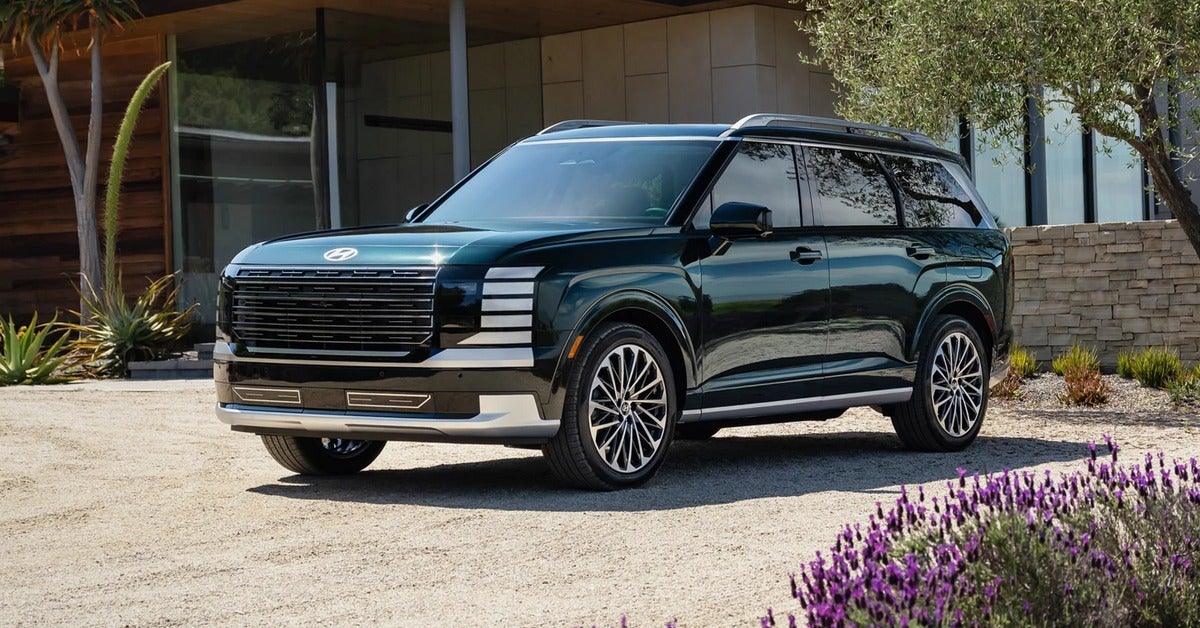
Palisade Exterior 1.91:1 marketing

Hyundai Palisade Guide for Puyallup Families: Seating, Cargo and Towing Explained

By Korum Hyundai Team · Published November 17, 2026 The Hyundai Palisade is Hyundai's largest SUV, and it was designed for families who need three real rows of seats. If you live in Puyallup and spend your week shuttling kids to practice, heading to the mountains on weekends or hosting relatives from out of town, the Palisade is worth a close look. This guide explains seating, cargo, towing and trims in plain terms, using figures from Hyundai's own specifications for the 2027 model year. What the Hyundai Palisade Is Built For Some three row SUVs treat the back row as an emergency space. The Palisade takes a different approach. It is a midsize SUV with a long wheelbase, a third row that adults can use on shorter trips, and cargo space behind that third row for groceries or a stroller. That makes it a strong match for a few kinds of drivers: Growing families who need room for car seats in the second row and older kids in the third. Carpool drivers who regularly carry more than five people. Weekend adventurers who tow a small camper or boat, or haul bikes and camping gear. Multigenerational households where grandparents ride along and easy entry matters. If you rarely carry more than four people and want easier parking, a smaller SUV like the Tucson may suit you better. The Palisade shines when space is the priority. New or pre owned Palisade. Because the Palisade has been on the road for several model years, you can also find pre owned examples. A newer model gives you the latest design, full factory warranty and current tech. A pre owned Palisade can be a good fit if you want three rows and are comfortable with an earlier version of the infotainment and safety features. Either way, check that the seating layout of the specific vehicle you are considering matches your family. If you go the pre owned route, a certified vehicle adds an inspection and extra powertrain coverage, which can be reassuring on a family hauler that will rack up miles. Seating: Eight Seats or Seven With Captain's Chairs. One of the first choices you will make is the second row layout. Hyundai lists the 2027 Palisade SE with seating for eight, using a second row bench. The SEL and SEL Premium trims seat seven with second row captain's chairs, with an optional eight seat layout. Bench seat: the eight seat setup. A bench gives you one extra seat. That is the right choice if you regularly carry eight people or need three car seats across the second row. Hyundai lists the bench as a 60/40 split that folds flat and reclines. Captain's chairs: the seven seat setup. Captain's chairs create a walkway to the third row. Kids can climb back without anyone in the second row getting out, which helps on rainy school mornings. The chairs also feel more like individual seats, which many older kids and adults prefer on long drives. Car seat tips for three row families If you use car seats, plan where each one will go before you buy. Rear facing seats take up a lot of front to back space, so check how far the front passenger seat has to move forward when a rear facing seat sits behind it. Forward facing seats and boosters are easier to place, but think about which child needs to climb past which seat. Many parents put the youngest child in the second row for easy reach and older kids in the third row. Bring your actual seats to the dealership and install them during your visit. It takes a few extra minutes and answers questions no spec sheet can. Getting into the third row. Hyundai lists a one touch second row seat slide for third row access on the SE, SEL and SEL Premium. The third row is a 60/40 split folding design with grab handles to help riders climb in and out. Hyundai's spec sheet gives the third row of the 2027 Palisade SE real legroom, which is enough for kids and fine for adults on short trips around town. Cargo Space for Real Puyallup Family Life. Cargo space is where three row SUVs can surprise you, because the space behind the third row is often small. Here are Hyundai's listed cargo figures for the 2027 Palisade SE, SEL and SEL Premium: Seat position Cargo capacity Behind the third row Room for a grocery run with every seat in use Behind the second row Room for a stroller, a cooler and luggage Behind the front seats 86.7 cubic feet In everyday terms, the space behind the third row handles a weekly grocery run or a folded stroller with every seat in use. Fold the third row and you have room for sports gear for a whole team or luggage for a family trip to the coast. Fold both rows and the Palisade can swallow flat pack furniture or a load of camping equipment. Hyundai also lists an underfloor storage compartment in the cargo area. It is a handy place for an emergency kit, jumper cables or wet gear after a hike. Tips for checking cargo space in person Bring your stroller, cooler or hockey bag to the dealership and load it yourself. Test how easily the seat release handles fold the rows. Check how high the load floor sits, especially if you lift heavy items often. Engine, AWD and Towing Hyundai lists a 3.5 liter V6 for the 2027 Palisade SE, SEL and SEL Premium. It makes 287 horsepower, paired with an eight speed automatic transmission. That gives the Palisade steady power for merging onto the highway with a full load of passengers. Front wheel drive or HTRAC AWD. Front wheel drive is standard and HTRAC all wheel drive is available. On AWD models, Hyundai adds Terrain Mode Select with Mud, Snow and Sand settings, plus Downhill Brake Control. If you drive toward the mountain passes in winter or live on a steep hill in Bonney Lake, AWD is worth considering. If most of your driving is on paved roads in town, front wheel drive with good tires may be all you need. Driving in Puget Sound rain Wet pavement and early darkness are part of life here from fall through spring. The Palisade's LED headlights, High Beam Assist and rear window defroster with timer are listed as standard on the SE, SEL and SEL Premium, which helps on gray mornings. The bigger factor is tires. Worn tires lose grip in standing water long before they look bald, so check tread depth on any SUV you buy and plan for replacement on schedule. Good tires make a front wheel drive Palisade feel planted and help an AWD model get the most from its system. Fuel economy. EPA estimates for the 2027 Palisade with the V6 are 19 city, 26 highway and 22 combined mpg with front wheel drive, and 18 city, 24 highway and 20 combined mpg with AWD. Your results will vary with how and where you drive. Towing a camper or boat. Hyundai lists a maximum trailer weight of 5,000 pounds with trailer brakes for the 2027 Palisade SE, SEL and SEL Premium, and a much lower figure without trailer brakes. A Tow Mode, Trailer Sway Control and trailering pre wiring are standard on those trims, while the tow hitch itself is an accessory. Always check the weight of your trailer and its contents, and ask our team to confirm the rating for the exact vehicle you choose. Tech and Safety Features That Help on Busy Roads. Long drives with a full car are easier when the vehicle helps you stay aware. Hyundai lists these features as standard on the 2027 Palisade SE, SEL and SEL Premium: Forward Collision Avoidance Assist with car, pedestrian and cyclist detection Blind Spot Collision Warning and Rear Cross Traffic Collision Avoidance Assist Lane Keeping Assist and Lane Following Assist Highway Driving Assist and navigation based Smart Cruise Control with Stop and Go Safe Exit Assist, which can warn passengers about approaching traffic before they open a door A Rear View Monitor with parking guidance For family comfort, the same trims list a 12.3 inch touchscreen with navigation, wireless Apple CarPlay and Android Auto, three zone automatic climate control, and high power USB C ports in all three rows. That last detail matters when every passenger has a phone or tablet. A Passenger Talk intercom and Rear Seat Quiet Mode are also listed as standard, so you can speak to the third row without shouting or let sleeping kids rest. Getting comfortable with driver assistance Driver assistance features work best when you understand them. During your test drive, ask to try Highway Driving Assist on a stretch of highway and notice how the steering and speed control feel. Learn where the buttons are to adjust following distance or turn a feature off. These systems are designed to support an attentive driver, not replace one, so keep your hands on the wheel and your eyes on the road. Once you know how each feature behaves, long trips with a full car become noticeably less tiring. How to Choose a Hyundai Palisade Trim. The 2027 Palisade comes in SE, SEL, SEL Premium, Limited, XRT PRO and Calligraphy trims. Rather than chase the longest feature list, start with the features you will use every day. SE. The SE covers the essentials: eight seats, the V6, the full safety suite listed above and the 12.3 inch touchscreen. It uses cloth seats and a 4.2 inch color display in the gauge cluster. SEL. The SEL moves to seven seats with captain's chairs, adds H Tex trimmed seats, heated front seats, a power driver seat, a wireless phone charger, roof rails and a hands free smart liftgate. It also gets a 12.3 inch digital instrument cluster. For many families, the hands free liftgate alone earns its place. SEL Premium. The SEL Premium adds comfort that you will notice on long drives: ventilated front seats, heated and ventilated second row seats, a heated steering wheel, a sunroof, driver memory settings and a Surround View Monitor. If you park in tight garages or busy lots, the camera views help. Limited, XRT PRO and Calligraphy The upper trims build on this with more luxury and, on the XRT PRO, a more rugged look. Feature details vary by trim, so ask our team to walk through the differences for the vehicles you are considering. Questions to ask before you pick a trim Which features will my family use every single day? Do I need heated and ventilated seats in the second row, or just up front? Will a hands free liftgate help when my arms are full of groceries or gear? Do I park in tight spaces where camera views would help? Do I want seven seats with a walkway or eight seats for maximum capacity? Answering these questions usually points clearly to one or two trims, which keeps your visit focused. Test Drive the Hyundai Palisade at Korum Hyundai The best way to judge a three row SUV is to bring your family and your gear. Load the car seats, climb into the third row and drive the roads you use every week. Visit Korum Hyundai in Puyallup to compare trims side by side, or browse new Palisade models in our inventory before you come in. If you prefer a pre owned model, you can also search our used inventory for certified options. Palisade Shopping Checklist Decide between eight seats with a bench or seven with captain's chairs. Measure your stroller, cooler or gear and test it in the cargo area. Choose front wheel drive or HTRAC AWD based on where you drive in winter. Confirm the towing setup if you pull a camper or boat. List the comfort features you will use daily, then pick the trim that covers them. Ask about financing options and how the application works before your visit. With these answers in hand, you can walk in knowing which Palisade fits your family and leave with the right one. For more, see the dealership's service.aspx and aboutus.aspx pages. Helpful pages from the dealership include its specials, trade-in and schedule service pages. You can also see its test drive and certified pre-owned pages. Frequently Asked Questions How many people does the Hyundai Palisade seat? Hyundai lists the 2027 Palisade SE with seating for eight. The SEL and SEL Premium seat seven with second row captain's chairs, with an optional eight seat layout. Ask our team which seating layouts are available on the trim you want. How much can the Hyundai Palisade tow? Hyundai lists a maximum trailer weight of 5,000 pounds with trailer brakes for the 2027 Palisade SE, SEL and SEL Premium. Without trailer brakes, the listed maximum is much lower. The tow hitch is an accessory, so confirm the setup on the exact vehicle you buy. Does the Hyundai Palisade come with all wheel drive? Front wheel drive is standard and HTRAC all wheel drive is available. AWD models add Terrain Mode Select with Mud, Snow and Sand modes. Many local drivers choose AWD for winter trips toward the passes. What warranty comes with a new Hyundai Palisade? Hyundai lists a 5 year or 60,000 mile New Vehicle Limited Warranty and a 10 year or 100,000 mile Powertrain Limited Warranty for the 2027 Palisade. Roadside assistance is listed for 5 years with unlimited miles. Coverage details and conditions apply, so ask for the full terms. Is the Hyundai Palisade third row comfortable for adults? Hyundai's spec sheet gives the third row of the 2027 Palisade SE real legroom, which works well for kids and is fine for adults on shorter trips. The second row slides forward to share space when needed. The best test is to sit in the third row yourself during a visit. Sources (as of October 20, 2026) 2027 Palisade | Three-Row Midsize SUV | Hyundai USA (as of October 20, 2026) 2027 Palisade Hybrid | Three-Row Midsize SUV | Hyundai USA (as of October 20, 2026) Hyundai Warranty Coverage | America's Best | Hyundai USA (as of October 20, 2026) Customer is responsible for sales tax, title, and license fee. A negotiable $200 documentation fee may be applied.

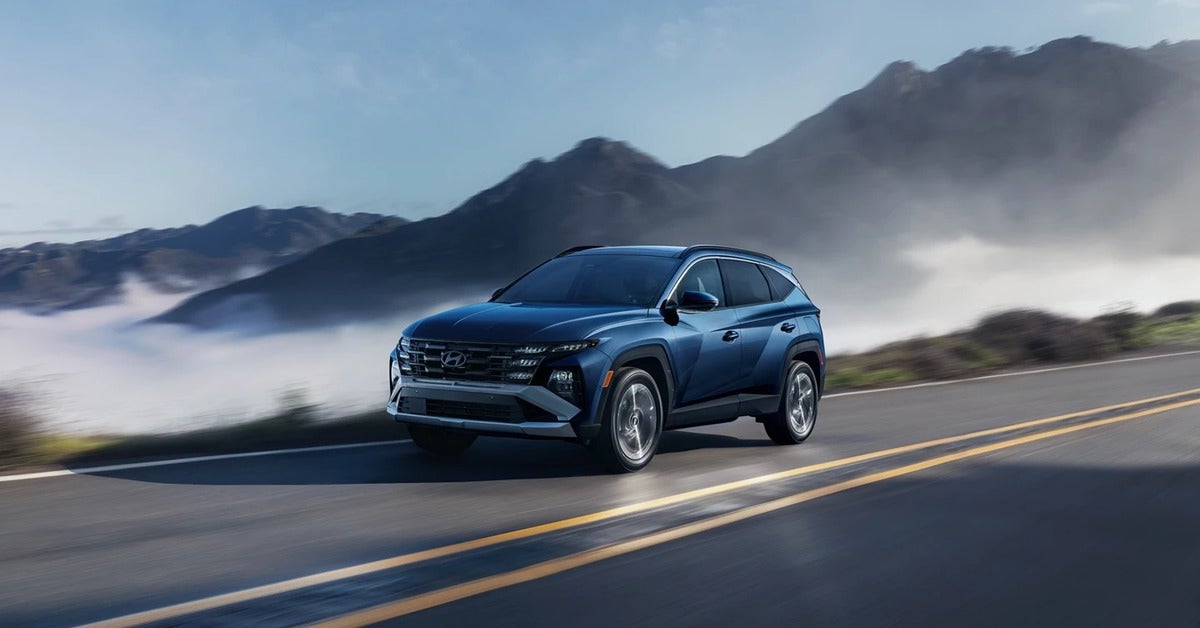
Tucson Exterior 1.91:1 marketing

Used Cars in Puyallup: How to Shop, Compare and Buy With Confidence

By Korum Hyundai Team · Published October 31, 2026 Shopping for used cars can feel like a lot of homework. There are more choices than ever, prices move fast, and every listing says the car is in great shape. This guide walks you through a simple process that shoppers in Puyallup and the rest of the South Sound can use to find a reliable vehicle, check its past, and finish the deal without surprises. You do not need to be a mechanic to buy well. You need a plan, a few good questions, and the patience to walk away from a car that does not check out. Start With How You Actually Drive Before you open a single listing, write down how you will use the car. This step saves more time than any other, because it narrows hundreds of choices down to a short list. Your daily miles and roads Think about your normal week. A driver who heads up State Route 167 every weekday has different needs than someone who mostly runs errands around town. Long commutes reward good fuel economy, a comfortable seat and helpful driver assistance features. Short trips reward easy parking and a smaller turning circle. Who and what you carry Count the people who ride with you most days, not the most you ever carry once a year. Then think about gear. Car seats, sports bags, camping equipment and a dog crate all take space. If you fold seats often, check how flat the load floor gets and how easy the seat releases are to reach. Weather and weekend plans Western Washington means wet roads for much of the year, and trips toward the mountains can bring snow. All wheel drive is helpful for some drivers, but good tires matter just as much. If you rarely leave paved roads, a front wheel drive car with quality all season tires may serve you well. How long you plan to keep it Be honest about your timeline. If you expect to keep the car for many years, a newer model with remaining factory coverage can make sense, because it lowers the chance of a big repair bill early on. If you only need a car for a short stretch, such as while you finish school or before a move, an older and simpler vehicle may be the smarter fit. Your timeline also affects how much you care about features. Tech that feels exciting today can feel dated in a few years, while comfort, space and reliability tend to matter the whole time you own the car. Must haves versus nice to haves Split your list into two columns. Must haves might be a third row, a certain cargo size or a specific safety feature. Nice to haves might be a sunroof or a premium stereo. When two cars look equal, the nice to haves can break the tie. They should not push you toward a car that misses a must have. Build a Budget Plan Before You Fall for a Car It is easy to start with the car and work backward to the budget. It works better the other way around. Decide on a comfortable total cost of ownership first, then shop inside that range. Think beyond the purchase. Insurance, fuel or charging, registration, tires and routine maintenance all add up. Two cars with similar sticker prices can cost very different amounts to own. Check your credit before you shop. Knowing where you stand helps you understand your financing options and avoid surprises. Get pre qualified if you can. A pre qualification helps you shop with a clear range in mind. On its finance page, Korum Hyundai says that in most cases it can offer financing with no down payment, and you can fill out the online credit application to get pre-approved for your next vehicle. Our finance team can walk you through the application and explain each step. Know your credit options. Korum Hyundai also says it has programs to help buyers get into a car and rebuild their credit, so a bruised credit history does not have to stop your search. Plan for your current vehicle. If you will trade in, gather your title or loan information early so the trade does not slow you down later. Once you know your range, you can filter listings with confidence and spend your time on cars that truly fit. How to Read a Vehicle History and Recall Record A history report and a recall check are two of the most useful tools a used car buyer has. They are not the same thing, so it helps to use both. The vehicle history report A history report pulls records tied to the vehicle identification number. Look for the number of owners, reported accidents, title brands such as salvage or flood, odometer readings over time, and service records. Gaps are not always a problem, but they are worth asking about. Several owners in a short time can be a sign that something kept bothering people. Odometer readings should rise steadily. A reading that drops is a red flag. Regular service entries are a good sign that the car was cared for. Commercial or rental use is not automatically bad, but it usually means more wear. Open recalls The National Highway Traffic Safety Administration offers a free lookup on its website. You enter the 17 character VIN, which you can find on the lower left of the windshield or on the registration card, and the tool shows whether that specific vehicle has unrepaired safety recalls. NHTSA notes that its VIN search does not show safety recalls more than 15 years old, so older vehicles need extra care. If a car you like has an open recall, that does not have to end the deal. NHTSA explains that safety recall remedies from manufacturers are free. Ask the seller whether the repair has been completed or can be done before you take delivery. What to Check on a Test Drive Around Puyallup A test drive should feel like a normal day in your life, not a quick loop around the block. Ask for enough time to drive on the kinds of roads you use most. Before you start the engine Walk around the car in good light. Look for uneven gaps between panels, paint that does not match, and tires that are worn on one edge. Check that all four tires are the same brand and have similar tread depth. Open every door, the hood and the liftgate or trunk. Look for rust, water stains or a musty smell. Sit in every seat you expect to use. Adjust the driver seat and mirrors until you are truly comfortable. On the road Listen for clunks over bumps and squeals when you brake. Feel for pulling to one side on a straight road. Make sure the transmission shifts smoothly when you speed up and slow down. Merge onto a highway to test power and wind noise at speed. Try the climate system on both heat and cooling, and turn on the defroster. You will need it on wet mornings. Tech and safety features Pair your phone, try the navigation or phone projection, and test any driver assistance features the car has. Ask how to turn features on and off so you know what to expect after you buy. Bring a second set of eyes If you can, bring a friend or family member on the test drive. One person can focus on driving while the other listens for noises, checks the back seat ride and tries the cargo area. Afterward, compare notes before you talk numbers. Small things you both noticed, like a rattle or a stiff seat adjuster, are fair questions to raise with the seller. Certified, Dealer Inspected or Sold As Is Not all used cars are sold the same way. Knowing the difference between these categories helps you compare listings fairly. Manufacturer certified pre owned A certified vehicle has met a set of standards from the brand and comes with added warranty coverage. Hyundai Certified Used Vehicles, for example, must be six model years old or newer with no more than 80,000 miles. Each one gets a 173 point mechanical, safety and appearance inspection and a free CARFAX report. Hyundai lists a 10 year or 100,000 mile Certified Used Vehicles Powertrain Limited Warranty, counted from the original sale, and 10 years of roadside assistance with unlimited miles. Other inspected vehicles Some dealers inspect and recondition vehicles that do not qualify for a certified program, such as older or higher mileage cars. Hyundai has a separate program for some of these, called Hyundai Select Used. Ask what the inspection covered and whether any coverage comes with the car. As is sales An as is vehicle comes with no warranty from the seller. That can be fine for a buyer who has the car checked by an independent mechanic first, but it puts more of the risk on you. If you want to see how these options compare in person, you can browse our used inventory and filter for certified vehicles. Comparing your finalists side by side Once you have two or three finalists, line them up with the same checklist. A simple table on your phone works well. Question Why it matters How many owners and accidents? Fewer owners and a clean record usually mean fewer unknowns. Is there an open recall? Recall repairs should be done before you drive it home. What warranty remains? Leftover factory or certified coverage lowers your repair risk. When are the next big services due? Tires, brakes and fluids may be due soon after you buy. Does it fit your must haves? A car that misses one will bother you every day. Ask each seller for maintenance records and the date of the last service. A car with documented oil changes and tire rotations is often a safer bet than a lower mileage car with no records at all. Also look at the cost of the next year. A car that needs new tires, brakes and a battery soon may cost more over the next year than a similar car that just had that work done. Ask what was replaced during reconditioning and factor upcoming work into your choice. Paperwork, Trade Ins and Taking Delivery The last step is the one many buyers rush. Slow down here. A careful finish protects everything you did before it. Read every document. Make sure the VIN on the paperwork matches the car, and that the mileage is correct. Confirm what comes with the car. Ask about the number of keys, owner manuals, floor mats and any accessories shown in the listing. Understand your coverage. If the car has remaining factory or certified warranty, ask for the details in writing. Bring your trade in documents. That means your title or loan payoff information, registration and all keys. Schedule a first service. Even a well kept car benefits from a fresh baseline. Our service department can set up your first visit and explain the maintenance schedule. You can schedule a service appointment online to reduce the amount of time you spend waiting. Connected features on a used Hyundai If you buy a used Hyundai, ask about connected services. Hyundai says eligible newer Hyundai Select Used vehicles include a three month trial of the Bluelink+ Advanced package, with the Basic package included at no cost. The team can help you set it up before you leave. Shop Used Cars With Korum Hyundai When you are ready to look in person, visit Korum Hyundai at 111 River Rd in Puyallup. Our team can pull history reports, explain certified coverage and set up a test drive on the roads you use every day. Start by searching our used vehicles online, then call or stop by to schedule a time that works for you. A Quick Used Car Checklist Write down how you drive, who rides with you and your must haves. Set a total ownership budget and check your credit. Pull the history report and run the VIN through the NHTSA recall lookup. Inspect the car in daylight and take a real test drive. Ask about certified status, remaining warranty and service records. Read every document and schedule a first service. Follow these steps and you will know exactly what you are buying, why it fits, and what it will need next. Frequently Asked Questions How do I check if a used car has an open recall? Use the free recall lookup on the NHTSA website. Enter the 17 character VIN from the windshield or registration card, and it will show any unrepaired safety recalls for that vehicle. NHTSA notes that recalls more than 15 years old do not appear, so ask the seller about older models. What is the difference between a certified used car and a regular used car? A certified used car has passed a brand inspection and comes with added warranty coverage. Hyundai Certified Used Vehicles, for example, must be six model years old or newer with no more than 80,000 miles and pass a 173 point inspection. A regular used car may or may not include any coverage, so always ask. Should I get a used car inspected before I buy it? Yes, an inspection is a smart step for any used car, and it is especially important for a car sold as is. A certified vehicle has already been inspected to brand standards, but you should still ask to see the inspection results. Either way, a test drive on your usual roads is a must. What should I bring when I buy a used car in Puyallup? Bring your driver license, proof of insurance and any financing pre qualification. If you are trading in a vehicle, bring its title or loan payoff details, registration and all keys. Having these ready keeps the visit short and smooth. Sources (as of October 30, 2026) Check for Recalls: Vehicle, Car Seat, Tire, Equipment | NHTSA (as of October 20, 2026) Hyundai Certified Used Vehicles | Search Inventory (as of October 20, 2026) Finance | Korum Hyundai (as of October 30, 2026) Service | Korum Hyundai (as of October 30, 2026) Customer is responsible for sales tax, title, and license fee. A negotiable $200 documentation fee may be applied.